Showing posts with label CLASS9CHEMISTRY. Show all posts

07/12/2021

ATOMS AND MOLECULES CHAPTER 3 CLASS 9 NCERT NOTES AND STUDY MATERIALS -part 1

 ATOMS AND MOLECULES CHAPTER 3 CLASS 9

In our previous classes, we have studied matter and its different forms. The matter is something that has mass and they need space to occupy. In this chapter, you will learn about atoms and molecules.
many Indian and Greek philosophers have contributed much to the discovery of atoms by which matter is made up.

If we go on dividing any matter, we will reach a stage where no more further division is possible. Democritus called these particles atoms which means indivisible.

At the end of the 18th century, scientists were interested in studying how and when elements are combining with each other. That laid the foundation for establishing two important laws of chemistry called the laws of chemical combination by Lavoisier and Proust.

LAWS OF CHEMICAL COMBINATIONS

1. LAW OF CONSERVATION OF MASS

The Law of conservation of mass states that mass can neither be created nor destroyed in a chemical reaction.

Example- We can consider the reaction of Barium chloride with Sodium sulphate. Weigh them separately before the reaction. We can observe that the weight remains the same after the reaction. Here a chemical reaction has taken place and produced a white precipitate of barium sulphate and colourless sodium chloride. But the mass remains the same before and after the reaction.


2. LAW OF CONSTANT PROPORTIONS


The law was stated by Proust as " In a chemical substance, the elements are always present in definite proportions by mass."

Example- In water(H2O), the ratio of the mass of Hydrogen to the mass of Oxygen is always 1:8. Similarly in Ammonia(NH3), Nitrogen and Hydrogen are present in the ratio of 14:3.

Then comes the atomic theory by John Dalton. His theory gave an explanation to the law of conservation of mass and the law of constant proportion. According to Dalton, every matter is made up of small particles called atoms.
The postulates of Dalton's atomic theory are:
(i) All matter is made of very tiny particles called atoms.
(ii) Atoms are indivisible particles, which cannot be created or destroyed in a chemical reaction.
(iii) Atoms of a given element are identical in mass and chemical properties. 
(iv) Atoms of different elements have different masses and chemical properties. 
(v) Atoms combine in the ratio of small whole numbers to form compounds.
 (vi) The relative number and kinds of atoms are constant in a given compound.

ATOM

The building blocks of all matters are atoms. All matter, whether an element, a compound or a mixture is composed of small particles called atoms.
It was Dalton who gave symbols for the atoms for the first time. Berzelius suggested that the symbols of elements be made from one or two letters of the name of the elements. Nowadays, IUPAC (International Union of Pure and Applied Chemistry) approves names of elements. Some symbols have been taken from the names of elements in Latin, German or Greek.
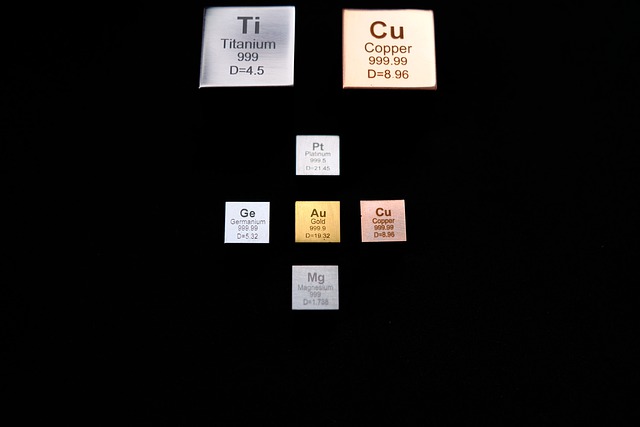
 
symbols of elements


Aluminium Al         Potassium K            Boron B                Hydrogen H
Copper Cu              Silicon Si                 Bromine Br           Iodine I
Nitrogen N             Sodium  Na             Carbon C               Lead Pb
Argon Ar                Silver-Ag                 Calcium Ca            Iron Fe
Fluorine F              Sulphur S                Chlorine Cl            Magnesium Mg 
Oxygen O              Uranium U               Cobalt Co              Neon Ne 
Barium Ba             Zinc Zn                    Gold Au 
    

Atomic Mass

Determining the mass of an individual atom was a relatively difficult task. So relative atomic masses were determined using the laws of chemical combinations and the compounds formed.

For a universally accepted atomic mass unit, carbon-12 isotope was chosen as the standard reference for measuring atomic masses.

 One atomic mass unit is a mass unit equal to exactly one-twelfth (1/12th) the mass of one atom of carbon-12. The relative atomic masses of all elements have been found with respect to an atom of carbon-12.

The atomic mass of certain elements are listed below:

Hydrogen- 1      Carbon- 12         Nitrogen -14 
Oxygen -16        Sodium- 23         Magnesium- 24 
Sulphur -32         Chlorine -35.5     Calcium -40

Molecule

A molecule can be defined as the smallest particle of an element or a compound that is capable of independent existence and shows all the properties of that substance. 

Atoms of the same element or of different elements can join together to form molecules.

A molecule of certain elements contain only one atom, but some elements may contain more than one atom. The number of atoms present in a molecule says about its atomicity.

The atomicity of Fe, Na, Ar and He is one. Hence they are monoatomic molecules.
The atomicity of O2, H2, N2, Cl2 and F2 is two. Hence they are called diatomic molecules.
Ozone O3 is a triatomic molecule, Phosphorus P4 is tetra atomic and Sulphur S8 is polyatomic with atomicity 8.

Atoms of different elements join to form compounds. We can find their atomicity by counting the number of atoms present in them. 
Eg. The Atomicity of Water H2O is 3, CO2 is 3, Ammonia NH3 is 4.

Ions

Atoms carrying charges are called ions. The charged species can be positive or negative. A positively charged ion is called a cation and a negatively charged ion is called an anion.
Sodium chloride contains Na+ cation and Cl- anion. Magnesium chloride contains Mg²⁺ and Cl-.
Ions can be present as a single charged atom or a group of atoms. Polyatomic ions are a group of atoms carrying charge. Example: OH-(hydroxide),  SO4²⁻(sulphate)


Writing Chemical Formula

What is chemical formula? As a beginner, you may always wonder how to write a chemical formula. A compound's chemical formula is a symbolic representation of its composition. A learner can easily understand the elements present in a compound by looking at the chemical formula. Moreover, it gives the number of atoms of each element present in it.


In order to write a chemical formula, we must learn the symbols and valency or combining capacity of elements.

Valency- the combining capacity of an element is called its valency. 


In water H2O, one atom of Oxygen is combined with two atoms of Hydrogen. So the valency of O is 2. 
In NaCl, the valency of sodium and chlorine is 1 as it combines with one atom only.

In Aluminium chloride, AlCl3, the Valency of Al is 3 and the valency of Cl is 1. It is very evident that Al is combined with 3 atoms of Cl and Cl is combined with one atom of Al.

Valencies of some common ions and polyatomic ions are given in Table3.6 of the NCERT Science textbook. 

The rules for writing a chemical formula are:

  • The valencies or charges of the ions must balance in a compound and overall structure must be neutral.
  • the symbol of metals should be written first followed by the symbol of non-metal (eg: FeS)
  • If there is more than one polyatomic ion, they should be enclosed in a bracket. (eg: Al2(SO4)3)

Steps for writing the chemical formula

Write the symbol of atoms present in a compound.

Write the valency or charge of each one under the symbol.

Crossover the valencies of the combining atoms and write it as a subscript on the right side of the symbol (like MgCl2)

If the valency is 1 on each atom, no need to specify it in the symbol (like NaCl).

Use brackets for more than one number of the same polyatomic ions (like Ca(OH)2 )

Sodium carbonate

Na        CO3

1            2

Crisscross the charges or the valencies.

We can write the chemical formula as Na2CO3

(Valency of sodium Na is 1 and hence it is not to be mentioned) 


13/07/2020

NCERT SCIENCE-CLASS 9-SEPARATION TECHNIQUES , IS MATTER AROUND US PURE-PART-2

IS MATTER AROUND US PURE? - PART-2 SEPARATION OF MIXTURES

In the first part, we have discussed element, compound, types of solution and mixtures. In this session, we shall discuss the various methods to separate the components of a mixture.

NCERT SCIENCE-CLASS 9-SEPARATION TECHNIQUES , IS MATTER AROUND US PURE-PART-2
NCERT SCIENCE-CLASS 9-SEPARATION TECHNIQUES, IS MATTER AROUND US PURE-PART-2


Is matter around us pure? Substances which we see around us may not be pure always. In many instances, we have to separate the components present in a mixture. So we are using several separation techniques, In the case of a heterogeneous mixture, components can be separated by simple methods like handpicking, sieving, filtering, magnetic separation etc. 
In this session, we can see other methods of separation used in a homogeneous mixture and some special cases of heterogeneous mixtures.

1. Evaporation 

The evaporation process is used for separating sea salt from seawater, which you have studied in lower grades. The same process can be used for separating the volatile component (solvent) from its non- volatile solute.
INK

Example: Ink is a mixture of dye. To obtain dye particles from ink, few drops of ink can be heated on a watch glass. It should not be heated directly. By keeping the watch glass over a beaker containing water and by heating the beaker ink particles are obtained as a residue. You can refer to the diagram given in your textbook.

2. Centrifugation

How can we separate butter from buttermilk? You might have seen churner used for this purpose. Still, we are using churner to collect butter and we make ghee from it.
When the solid particles present in a liquid is very small in size, it will pass through the filter paper. Those mixtures can be separated by the separation techniques called centrifugation. 

CENTRIFUGE
The principle of centrifugation is that the denser particles are forced to the bottom of the centrifuging tube and the lighter component in the mixture will remain on top when it is spun at high speed.
Using this principle we can:
  • separate butter from curd
  • test blood and urine in the diagnostic lab
  • squeeze out water from wet clothes in a washing machine.

3. Separating funnel

How can we separate oil from a mixture of oil and water? Two immiscible liquids can be separated based on its densities. The apparatus used for this separation technique is called separating funnel. By opening the stopcock of the separating funnel, we can pour out the lower layer carefully.

SEPARATING FUNNEL


4. Sublimation

How can we separate a white coloured ammonium chloride from a similar coloured common salt? The sublimation process can be used to separate a mixture containing a component which sublimes from a component which does not sublimes.
Ammonium chloride will undergo sublimation on heating, while common salt does not. On cooling it further, ammonium chloride will undergo deposition and it can be separated.
There are many other compounds like naphthalene and anthracene which can be separated by this method.

5. Chromatography

It is the separation technique for separating solutes that dissolve in the same solvent. This technique got its name from the Greek word Kroma which means colour. It was used for the separation of colours in dyes earlier. Using advanced technology, now we are using it in various fields like separating drugs from the blood.

DYE

A dye is a mixture of two or more colours mixed together. By chromatography, the coloured component that is more soluble in the water rises faster and gets separated. So depending upon the solubility different coloured components are seen on different zones.


6. Distillation

DISTILLATION


This is a very popular separation technique. Distillation is the method used to separate components of a mixture containing two miscible liquids that boil without decomposition. Each component should have sufficient difference in boiling point and it should be more than 25 K.The basic principles behind this is evaporation followed by condensation. The component which boils first will get evaporated first and is collected after condensing it.
Example: a mixture of acetone and water.

DISTILLATION


For mixtures with less than 25 K boiling point difference, fractional distillation is used. It is widely used in petroleum refineries to separate fractions of petroleum-like petrol, diesel, kerosene etc. Components of petroleum and different gases present in the air are separated by an advanced separation technique called fractional distillation.
fractional distillation

7. Crystallisation

Have you ever wondered how crystals are formed? Do you know how these beautiful crystals are made? 
Crystallisation is a method usually used to purify solids. It separates a pure solid component in the form of crystals from its solution leaving behind the impurities in it.
Example: Pure copper sulphate can be obtained from its impure sample by crystallisation. Salt from seawater is also purified by this method.

crystals
crystals


So depending upon the nature of the components present in a mixture, we can select various methods of separation. These separation technique has got much application in the manufacturing field of many substances.


09/07/2020

is matter around us pure- chapter 2, pure substance and mixtures

NATURE OF MATTER-SCIENCE- CBSE-STUDY MATERIAL- PART-1-IS MATTER AROUND US PURE CLASS 9

is matter around us pure class 9

In our daily life, we come across different types of substances and we are considering some among them as pure substances. Are they actually pure? 

What are the conditions for a substance to be pure? 

We can classify matter into two types based on its chemical composition.

1.Pure substances

2.Mixtures

PURE SUBSTANCE - Substances that consist of a single type of particles are said to be pure.

Example- A piece of gold is said to be pure if it contains only gold particles in it.

gold nugget

MIXTURES - substances that contain more than one substance mixed in any proportion. Mixtures are not having any fixed composition.

 Mixtures can be separated into pure substances by using separation techniques.

Example- Solution of salt and water, oil in water

oil in water

TYPES OF PURE SUBSTANCES 

Pure substances can be classified into two types based on their chemical composition:

1. Element

2. Compounds

ELEMENT- Elements are pure substances that can not be broken down into simpler substances by chemical reactions.

Example- Iron, Oxygen, Hydrogen, Mercury, Gold.

All the known elements are arranged in a table called the periodic table in which the symbol and its basic information are given.

periodic table

Elements can be classified into three:
  • metals
  • non-metals
  • metalloids

METALS- Iron, Copper, Gold, Silver, Mercury, Sodium, Magnesium.


SILVER & GOLD

Properties of metals:

  • Metals are lustrous
  • They conduct electricity and heat
  • They are malleable
  • They are ductile
  • They are sonorous
  • They have mostly silvery-grey or golden yellow color.
  • Most of the metals are solids, except Mercury(liquid).

NON-METALS- Hydrogen, Oxygen, Nitrogen, Carbon, Sulphur, Chlorine, etc.

Bromine is a liquid non-metal.

SULFUR

Properties of non-metals:
  • Non-metals are non-lustrous
  • They are not malleable
  • They are not ductile
  • They are poor conductors of electricity and heat
  • They display different types of colors
  • They are non-sonorous

COMPOUND- These are substances in which two or more elements combined in a fixed proportion.

Example- Water ((H2O), Carbon dioxide (CO2), Iron sulfide (FeS)
  • Elements of different elements can combine to form compounds.
  • The substance formed is entirely different in its properties.
  • The new substance formed has a fixed composition.
  • The constituents present in a compound can be separated by chemical or electrochemical methods.

TYPES OF MIXTURES

Based on the nature of the components that form a mixture, there are two types of mixtures. They are:
  • Homogeneous mixtures
  • Heterogeneous mixtures
 Homogeneous mixtures- A mixture that has a uniform composition throughout.
Example- Sugar in water, salt in water, copper sulfate in water.
HOMOGENEOUS SOLUTION

Heterogeneous mixtures -A mixture that has a non- uniform composition. It has physically distinct particles.

Example - a mixture of sand and salt, the mixture of oil and water, the mixture of salt and iron filings.

MIXTURE OF SEEDS


SOLUTION

Solute + Solvent = Solution
The component of the solution which dissolves the other component in it is called the solvent.

The component that is dissolved in the solvent is called the solute.

In tincture iodine, iodine is the solute that is dissolved in solvent alcohol. In soda, carbon dioxide is the solute and water is the solvent.

A solution is a mixture of two or more components. We come across different types of solutions in our life like lemonade, soda, salt solution, etc. 

By mixing the three states of matter solid, liquid, or gas in different proportions, a solution can be made. 

There are solid-solid solutions like alloys in which different metals or one metal with a non-metal is mixed.

We can classify solutions into three types:

  • True solution
  • Colloids
  • Suspension

PROPERTIES OF A TRUE SOLUTION

  • It is a homogeneous mixture.
  • The particle size is less than 1 nanometer in diameter.
  • Particles in a solution can not be seen by naked eyes.
  • They do not show the Tyndall effect-do not scatter a beam of light passing through the solution.
  • Particles can not be separated by filtration.
  • The solution is stable- the particles do not settle down.
Example - salt solution, copper sulfate solution.

True solution


PROPERTIES OF A COLLOIDS

  • A colloid is a heterogeneous mixture.
  • The particle size is 1-100 nanometer in diameter.
  • Particles in the solution can not be seen by naked eyes.
  • They show Tyndall effect-
  • particles are big enough to scatter a beam of light passing through the solution and make the path visible.
  • It is stable- the particles do not settle down when left undisturbed.
  • Particles can not be separated by filtration. But can be separated by centrifugation.
Examples of colloids- Milk, fog, smoke, foam, jelly.

Milk- colloid

The main types of colloids are aerosol, foam, emulsion, sol, gel, and solid sol.

Like solute and solvent, the components in a colloid are called a dispersed phase and a dispersion medium.

The dispersed particles in a colloid are called the dispersed phase and the component in which the dispersed phase is suspended is called the dispersion medium.
Example- in fog, water particles are dispersed phase and the air is the dispersion medium.

Fog- colloid

TYNDALL EFFECT

It is the process of scattering of a beam of light by the small particles like colloidal particles. 

The Tyndall effect can be observed when a beam of light enters a room through a window or small hole, where dust particles present in air scatters light.
 
Similar is the case with the beam of sunlight in a canopy. In the forest, tiny droplets of water in the mist acts as the colloidal particles in the air.


Mist-Tyndall effect


PROPERTIES OF SUSPENSION

  • The particle size is more than 100 nm.
  • It is a heterogeneous mixture.
  • The particles can be seen by our naked eye.
  • The particles can scatter a beam of light passing through it and make its path visible. But when particles settle down, it cannot scatter light and can not show the Tyndall effect.
  • It is unstable- particles settle down.
  • Can be separated by filtration.
Example- Chalk powder in water, sand, and water


06/07/2020

matter in our surroundings-STUDY MATERIAL FOR CLASS 9 SCIENCE - CHAPTER 1

CHAPTER-1 MATTER IN OUR SURROUNDINGS 

matter in our surroundings


Everything we see around us in the universe is made up of matter. The matter is something which has mass and needs space to occupy. You have studies about the classification of matter in our surroundings in lower grades as solid, liquid and gas.
 
Scientists have made two types of classification of matter based on its physical properties and chemical nature.

PHYSICAL NATURE OF MATTER

(a) Matter is made up of particles

When we dissolve salt in water, the level of water level remains the same. This is due to the small particle size of salt, which occupies the space between the water molecules. Particles of salt and water mix up together to make the salt solution.

PARTICLES IN MATTER

(b) Particles of matter are very small

When few crystals of copper sulphate are dissolved in water, it forms a blue coloured solution. On diluting this solution to three or more times, still, we can observe the blue colour. This indicates the presence of small particles of copper sulphate in the solution even after dilution.

COPPER SULPHATE SOLUTION


CHARACTERISTICS OF PARTICLES OF MATTER

  • Particles of matter have space between them.
  • Particles of matter are continuously moving.
  • Particles of matter attract each other.

Activity-1

Take some crystals of potassium permanganate and add it to water taken in a beaker. Check the change in water level before and after addition.
We can observe that there is no change in water level. This indicates that there is enough space between the particles of water and potassium permanganate crystals have occupied those space.

We can conclude that there is a space between the particles of matter.

Activity-2

Drop a few crystals of copper sulphate into a beaker containing hot water and another one containing cold water. Keep it aside for some time without disturbing.

We can observe that particles of copper sulphate in hot water got mixed up faster than cold water. The rate of mixing increases with increase in temperature.

We can conclude that particles of matter are continuously moving and possess kinetic energy. With the increase in temperature, the kinetic energy of the particles also increases.

DIFFUSION- The process of intermixing of particles by its own is called diffusion.The rate of diffusion increases with increase in temperature.

Rate of diffusion is as follows:
gas > liquid>solid

Activity-3


RUNNING WATER

When you are trying to break the stream of water of running tap water with your finger, we can easily do it. But if we are trying to cut through a wall, it is not possible.
 This proves that the particles of matter in the liquid state have less force of attraction than solid-state.

Rate of attraction is as follows:
solid state>liquid state>gaseous state

DIFFERENCE BETWEEN SOLID, LIQUID AND GAS

 SOLID LIQUID GAS
 definite shape no definite shape no definite shape
 definite volume definite volume no definite volume
 do not flow can flow can flow
 minimum intermolecular space  more intermolecular space
 than solid
 maximum intermolecular space
 the maximum force of attraction
 between particles
less force of attraction than 
solid 
 a minimum force of attraction
 negligible compressibility more compressible than solid highly compressible

Two examples of  gases which are used widely after compression-LPG (liquified petroleum gas) and CNG (compressed natural gas)

The pressure of gas- The gas particles in a container are continuously moving. During this random movement, they hit each other and also collide with the walls of the container. 

The pressure of a gas is due to the force exerted by the particles of gas per unit area on the wall of the container.


EFFECT OF CHANGE OF TEMPERATURE ON MATTER

The kinetic energy of the particles increases by increasing the temperature of solids. The particles start vibrating and overcome the force of attraction and change into liquid form. 

The temperature at which the solid melts and forms into a liquid at the atmospheric pressure are called the melting point.
The melting point of ice is 273.16 K or 0⁰C.
The process of melting is also called fusion.

Latent heat of fusion- During melting of ice, we can observe that the temperature of the system does not rise until all ice melts. The heat supplied is used to overcome the force of attraction and it will be in the form of hidden energy. This hidden energy is called latent heat.

The amount of heat energy required to change 1 kg of a solid into liquid at its melting point at the atmospheric pressure is called the latent heat of fusion.

So when you compare the particles of water and ice at 273 K, water has more energy than ice.
Similarly, we can explain the latent heat of vapourisation in the case of boiling of water to steam.

The temperature at which the liquid changes to gaseous form at the atmospheric pressure is called the boiling point.

Boiling is a bulk phenomenon, but evaporation is a surface phenomenon. The boiling point of water is 373 K or 100⁰C.

Particles in steam have more energy than particles in water at 373 K because particles in vapour state have absorbed extra energy in the form of latent heat of vaporisation. Hence steam burning is more severe than water at the same temperature.

To convert Celcius to Kelvin, add 273 and to convert Kelvin scale to Celcius, subtract 273.

5⁰C= 5+273=278 K

Sublimation- The process of change of state directly from solid to a gas without changing into a liquid state is called sublimation.

Example for sublimable substances- ammonium chloride, naphthalene(mothballs), anthracene, dry ice

EFFECT OF CHANGE OF PRESSURE

On applying pressure and compressing gas, the particles will come closer and change its state into liquid. The conditions for liquifying a gas are -

  • By increasing pressure
  • By reducing temperature.
DRY ICE- solid carbon dioxide is called dry ice. It is stored under high pressure and when it is exposed to air, it gets converted to the gaseous form without going to its liquid state.

DRY ICE IN A JAR

EVAPORATION AND THE FACTORS AFFECTING EVAPORATION

Liquids can change into its vapour state at any temperature below at its boiling point. This phenomenon is called evaporation.

In liquids, the particles at the surface are having more kinetic energy than in the bulk and are able to overcome the force of attraction easily and changes into the vapour state.

Factors affecting evaporation are:

  • increase in temperature
  • increase in wind speed
  • increase in surface area
  • decrease in humidity
  • DRYING CLOTHES

When temperature increases, more particles will get kinetic energy to get converted into vapour state and the rate of evaporation increases.

When the surface area is increased, more area of exposure increases and the rate of evaporation is increased. 

Humidity is the amount of water vapour in the air. If the air is more humid, it can not hold more water vapour which is coming through evaporation.

 So the evaporation rate is decreased when humidity is more. That is why clothes are drying up slowly on a cloudy rainy day.

Evaporation can cause a cooling effect-

The particles of liquid can absorb more heat energy from the surroundings in order to regain the energy lost during the evaporation process. This makes the surrounding cool.


Example: nail polish remover will take heat from our body and we feel cool. For evaporation of sweat, it takes heat energy from our body and we feel cool.
In our daily life, we can relate the topic of evaporation to many instances.


Featured post

COMBUSTION AND FLAME CLASS 8 SCIENCE NCERT IMPORTANT QUESTIONS

  COMBUSTION AND FLAME  IMPORTANT QUESTIONS combustion and flame Fill in the blanks: 1. The substance which has a very low ignition temperat...

Popular posts