Showing posts with label CLASS8SCIENCE. Show all posts

06/02/2022

COMBUSTION AND FLAME CLASS 8 SCIENCE NCERT IMPORTANT QUESTIONS

 COMBUSTION AND FLAME

 IMPORTANT QUESTIONS

combustion and flame


Fill in the blanks:

1. The substance which has a very low ignition temperature and can easily catch fire are called ----------.
2. The calorific value of a fuel is expressed as -----------.
3. ---------- is the only non-metal which catch fire if exposed to air.
4. The fire produced by oil and petrol cannot be extinguished by --------.
5. The burning of fuels like wood and cow dung cake releases unburnt ------- particles in the air.

MCQ

6. Light and heat are produced in the Sun by:
        a. burning wood
        b. oxygen
        c. nuclear reaction
        d. boiling water
7. The lowest temperature at which a substance catches fire is known as:
        a. burning temperature
        b. flaming temperature
        c. lowest temperature
        d. ignition temperature
8. Which among these are required for the production of a fire?
        a. fuel, water, heat
        b. fuel, oxygen, heat
        c. heat, burner, water
        d. heat, water, oxygen
9. During the explosion, there is an evolution of:
        a. light
        b. heat
        c. sound
        d. all of these
10. When we heat a paper cup containing water, it does not catch fire because:
        a. paper is inflammable
        b. water makes it wet
        c. ignition temperature of paper is not reached due to the presence of water
        d. none of these 

ASSERTION-REASON QUESTIONS

In the following questions, a statement of assertion(A) and a statement of the reason(R) are given. Select the correct option for the following assertion-reason questions:

a. Both A and R are true and R is the correct explanation of A.

b. Both A and R are true and R is not the correct explanation of A.

c. A is true but R is false.

d. A is false and R is true.

e. Both A and R are false.

11. Assertion(A)-Kerosene oil catches fire easily.
    Reason(R)-The ignition temperature of kerosene is very high.
12. Assertion(A)- Goldsmiths usually blow at the inner zone of a flame for melting gold.
    Reason(R)- The innermost zone of a flame is the hottest part.
13. Assertion(A)- Water is not suitable for fires involving oil and petrol.
    Reason(R)- Water sinks below the oil layer and oil keeps on burning on the top.
14. Assertion(A)- Charcoal does not form a flame.
    Reason(R)- Charcoal is a combustible substance.
15. Assertion(A)- CNG is a cleaner fuel.
    Reason(R)- CNG produces a very small amount of harmful products and is less polluting.

ANSWERS

1. Inflammable substances
2. kJ/kg
3. Phosphorus
4. Water
5. Carbon
6. nuclear reaction
7. ignition temperature
8. fuel, oxygen, heat
9. all of these
10. ignition temperature is not reached due to the presence of water
11. c
12. e
13. a
14. b
15. a

16/11/2021

COAL AND PETROLEUM CLASS 8 EXTRA QUESTIONS INCLUDING ASSERTION REASON TYPE QUESTIONS

             COAL AND PETROLEUM

coal and petroleum


EXTRA QUESTIONS INCLUDING ASSERTION REASON 

FILL IN THE BLANKS

1. Earlier --------- was used in railway engines to produce steam to run the engine.
2. The slow process of conversion of dead vegetation into coal is called -----------.
3. Coal, --------- and natural gas are fossil fuels.
4. The resources that are present in unlimited quantity in nature and are not likely to be exhausted are called ----------.
5. A petroleum product, -------- is used in place of coal tar for surfacing the road.
6. ----------- is obtained during the processing of coal to get coke.
7. Naphthalene balls which is used as a moth repellent is obtained from ---------.
8. The word petroleum is derived from the words -------- and -------.
9. Coal is of plant origin and --------- is of animal origin.
10. Refining of petroleum is carried out in ------------.
11. ------- is a less polluting fuel and is said to be a cleaner fuel.
12. Petroleum is called ----------- due to its great commercial importance.

MCQ

1. Which among these is an inexhaustible natural resources?
a. coal    b. petroleum    c. sunlight    d. natural gas
2. Which product of coal is used in the manufacture of steel?
a. coal tar    b. coke    c. coal gas    d. bitumen
3. The process of separating the various fractions of petroleum is called --------
a. mining    b. filtering    c. carbonisation    d. refining
4. Which among these petroleum product is used as a solvent for dry washing?
a. petrol    b. diesel    c. kerosene    d. paraffin wax
5. ------- is used in thermal power plant to produce electricity.
a. petrol    b. coal tar    c. coal    d. coke

ASSERTION-REASON QUESTIONS

In the following questions, a statement of assertion(A) and a statement of reason(R) is given. Select the correct option for the following assertion-reason questions:

a. Both A and R are true and R is the correct explanation of A.

b. Both A and R are true and R is not the correct explanation of A.

c. A is true but R is false.

d. A is false and R is true.

1. Assertion- The amount of exhaustible natural resources are limited.

   Reason- Exhaustible  natural resources are not likely to be exhausted by human activities.

2. Assertion- Coal is a fossil fuel.

   Reason- Coal is formed from the remains of vegetation.

3. Assertion- CNG is cleaner fuel.

   Reason- CNG can be supplied directly through pipes.

4. Assertion- Coal, petroleum and natural gas can be prepared in the laboratory.

   Reason- Formation of fossil fuel is a very slow process.

5. Assertion- The layer of petroleum and natural gas are seen above the water layer in oil wells.

   Reason- Petroleum and natural gas are lighter than water.

ANSWER THE FOLLOWING: 

1. Name any two places in which natural gas is found in India.
2. Name the different products obtained on processing of coal.
3. Name three fossil fuels.
4. Name the fraction of petroleum which is used in road surfacing.
5. List out any six constituents of petroleum.
6. Expand CNG.
7. Differentiate between exhaustible and inexhaustible natural resources.
8. What are fossil fuels?
9. What is carbonisation?
10. Write any three uses of coal.
11. What is refining of petroleum?
12. What are the characteristics of coke?
13. Explain the of formation of coal. 
14. Explain the formation of petroleum.
15. List out any four ways by which we can save fossil fuels. 

ANSWERS

FILL IN THE BLANKS:
1. coal
2. carbonisation
3. petroleum
4. inexhaustible natural resources
5. bitumen
6. coal gas
7. coal tar
8. petra, oleum
9. petroleum
10. petroleum refinery/ refinery
11. CNG
12. black gold

MCQ
1. sunlight
2. coke
3. refining
4. petrol
5. coal

ASSERTION-REASON TYPE
1. c
2. a
3. b
4. d
5. a


12/07/2020

NCERT science class 8- metals and non metals, chapter-4, notes

METALS AND NON-METALS CHAPTER-4 CLASS-8  

NCERT science class 8- metals and non metals, chapter-4, notes
NCERT science class 8- metals and non-metals, chapter-4, notes

We are familiar with a variety of materials which are used in our daily life. In lower grades, we have classified materials based on its appearance, hardness, transparency and texture.

In this session, we will deal with a major classification of materials. 
Based on its physical and chemical properties we can classify materials like metals and non-metals.

Out of 118 elements discovered, the majority of them are metals and these elements are arranged in the periodic table to make our studies easier. Gold, silver, iron, copper and aluminium are some of the popular metals.
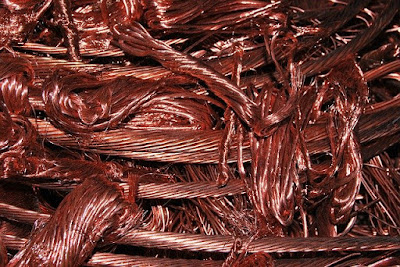
copper metal

PHYSICAL PROPERTIES OF METALS

  • Metals are generally hard. But there are few soft metals like sodium and potassium which can be cut with a knife.
  • Metals are generally solid. But mercury is a liquid metal at room temperature.
  • Metals are lustrous- having a shining surface.
  • Metals are malleable- It can be beaten into thin sheets. We are using aluminium foil and silver foil as thin sheets. 
  • Malleability-It is the property of metals by which it can be beaten into thin sheets.
  • Metals are ductile- It can be drawn into wires. Aluminium and copper wires are normally used in electrical cables and wires.           Ductility- It is the property of metals by which it can be drawn into wires.
  • Metals are good conductors of heat and electricity.
  • Metals are sonorous- makes a ringing sound when struck hard.
  • Melting point and boiling points of metals are generally high.
aluminium foil


conductors of electricity

PHYSICAL PROPERTIES OF NON-METALS

  • Non-metals are not hard and they exist as solid, liquid and gas. Solid- carbon, sulphur, phosphorus, liquid- bromine, gas- hydrogen, oxygen, nitrogen
  • They are not malleable.
  • They are not ductile.
  • They are poor conductors of electricity and heat.
  • They are generally dull except iodine.
  • They are non- sonorous.
  • Non- metals have a comparatively low boiling point and melting point.

CHEMICAL PROPERTIES OF METALS 

1.Reaction of metals with oxygen

Metals will react with oxygen to form their corresponding oxides.

Metal + Oxygen → Metal oxide

Magnesium burns with oxygen to form Magnesium oxide (white powder)
On dissolving magnesium oxide with water, it forms magnesium hydroxide which turns red litmus paper to blue.

Mg + O2 → MgO
MgO + H2O → Mg(OH)2

Similarly iron reacts with oxygen and water in the air to form an iron oxide which we commonly call as rust.

Fe + O2 + H2O → Fe2O3 .xH2O

RUSTED GATE


Copper reacts with air to form basic copper carbonate which is commonly called as verdigris(green coating).

Cu + O2 + H2O + CO2 → Cu(OH)2 + CuCO3
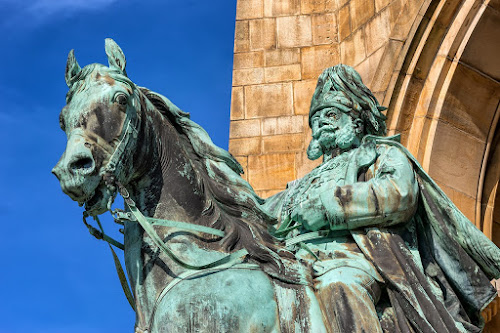
VERDIGRIS GREEN COATING


Metal oxides formed are generally basic in nature.

2. Reaction of metals with water

Different metals are reacting with water in different manners. Some react very slowly and some of them do not react at all. But metals like sodium and potassium react very violently with water. Hence they are stored in kerosene to prevent its reaction with water and other components in the air. 

Iron reacts very slowly with water. Noble metals like gold and silver do not react with water.

3. Reaction  of metals with acids

Metals react with acids to form metal salts and hydrogen.

Mg + HCl → MgCl2 + H2

The presence of hydrogen can be tested using a burning match stick. It burns with a pop sound when bought near the mouth of the test tube.
The reaction condition is different for different metals. Some react at room temperature, but some of them will react when warmed.

Copper reacts with sulphuric acid, but it does not react with hydrochloric acid even on heating.
Less reactive metals like silver and gold do not react with dilute acids.

4. Reaction with bases

Metals react with bases like sodium hydroxide to form hydrogen.

On dropping a strip of aluminium into sodium hydroxide solution, hydrogen gas is evolved which makes a pop sound on a burning match stick.

5. Displacement reaction

A more reactive metal can displace a less reactive metal from its compound in aqueous solution.

On placing an iron nail in blue coloured copper sulphate solution, it forms a green coloured iron sulphate solution and brown deposits of copper. Here iron being more reactive can replace copper from copper sulphate.

Fe + CuSO4 → FeSO4 + Cu

But copper is not able to replace iron as it is less reactive than iron.


copper sulphate

iron sulphate


Displacement reaction happens based on the reactivity series. It is the arrangement of metals in a vertical column in order of decreasing reactivity.

Reactivity series:

Potassium     (most reactive)

Sodium

Calcium

Magnesium

Aluminium 

Zinc

Iron 

Lead

Hydrogen

Copper

Mercury

Silver

Gold  (least reactive)

(mnemonics to learn reactivity series- please stop calling me a zebra, I like her calling me a smart goat- the first letter of metals)

CHEMICAL PROPERTIES OF NON-METALS

1. Reaction with oxygen

Certain non- metals with react with oxygen to form oxides and on dissolving with water, it forms acids. Hence non-metal oxides are acidic in nature.

For example, sulphur on burning with oxygen forms sulphur dioxide(SO2).On reaction with water, it forms sulphurous acid(H2SO3).

S + O2 → SO2

SO2 + H2O → H2SO3

2. Reaction with water

Non- metals are not reactive with water. Hence non-metals like phosphorus is stored in water to avoid the reaction with oxygen in the air. It is a very reactive non-metal and catches fire on exposure to air.

3.Reaction with acids

Non-metals are not reactive with acids generally.

4.Reaction with bases

The reaction of non-metals with bases are normally complex.

USES OF METALS

automobile

gate

rails
utensils


USES OF NON-METALS

fertilizer


for breathing

tincture iodine antiseptic

11/07/2020

synthetic fibres and plastics class 8 extra questions, assertion reason type questions

SYNTHETIC FIBRES AND PLASTICS- IMPORTANT QUESTIONS

synthetic fibres and plastics class 8 extra questions, assertion reason type questions


FILL IN THE BLANKS:

1. Rayon is obtained by the chemical treatment of ---------
2. --------is the synthetic fibre used to make parachutes.
3. The synthetic fibre which resembles wool is -------
4. Polycot is a mixture of -------- and cotton.
5.The plastic which can be deformed easily on heating is known as ---------
6. ---------- is used to make handles of utensils.
7. A material which is not easily decomposed by natural processes are called --------
8. Plastics are ---------- of heat and electricity.
9. Uniforms of firemen have a coating of ---------- to make them flame resistant.
10. ----------- is used for non-stick coating on cookware.

ASSERTION-REASON QUESTIONS

Select the correct option for the following assertion-reason questions:

a. (A) is correct and (R) is the correct explanation of (A).

b. (A) is correct and (R) is not the correct explanation of (A).

c.(A) is correct and (R) is wrong.

d. (A) is wrong and (R) is correct.

1. Assertion(A): Bakelite is used for making electrical switches.

Reason(R): Bakelite is a poor conductor of electricity.

2. (A) Thermosetting plastics can not be remoulded.

(R) Thermosetting plastics can be softened on heating.

3. (A) Synthetic fibres are more popular than natural fibres.

(R) Synthetic fibres are more durable and less expensive.

4. (A) Nylon fibres can not be used for making ropes for climbers.

(R) Nylon fibres are very strong fibres.

5. (A) We should not use synthetic fabrics while working in the kitchen.

(R) Synthetic fabrics dry up quickly and are easy to wash.

SHORT ANSWER QUESTIONS:

1. Which fibre is called artificial silk? Why?
2. List five uses of nylon.
3. What are the uses of PET polymer?
4. What are the characteristics of synthetic fibres?
5. Differentiate thermoplastics and thermosetting plastics.

ANSWERS:
Fill in the blanks:
1. wood pulp
2. nylon
3.acrylic
4. polyester
5.thermoplastics
6. bakelite
7. non-biodegradable
8. poor conductors
9. melamine
10. teflon

Assertion-Reason type:
1. (a)
2. (c)
3. (a)
4. (d)
5. (b)


01/07/2020

synthetic fibers and plastics class 8, NCERT - easy study material-notes- important topic

SYNTHETIC FIBERS AND PLASTICS- IMPORTANT TOPICS

synthetic fibres and plastics class 8
synthetic fibers and plastics class 8

plastic bottles in nylon net

In our daily life, we are using different types of fabrics which are made up of natural and synthetic fibers. Natural fibers like cotton and wool are obtained from plants and animals. 
Synthetic fibers are made by human beings and hence they are called man-made fibers.

Synthetic fibers are made by the process of polymerization. Greek words 'poly' means many and 'mer' means unit or part. 
So a polymer is made of many repeating units joined together. Each repeating unit is called a monomer. The polymer is similar to a chain of beads.

Example: in polyester, an ester is a repeating unit. Cellulose is a natural polymer with many glucose units.

beads on chain

CHARACTERISTICS OF SYNTHETIC FIBRES

Fabrics made up of synthetic fibers are very popular. They are durable, less expensive, and can be easily maintained. They dry up quickly and are wrinkle-free. The color of synthetic fabrics will not fade.

TYPES OF SYNTHETIC FIBRES

                                        RAYON

  • Rayon is a synthetic fiber having properties similar to that of silk. Hence it is called artificial silk.
  • On the chemical treatment of wood pulp, we can obtain a rayon.
  • It is cheaper than silk and can be dyed in a variety of colors.
  • When rayon is mixed with cotton, we can make bed sheets.
  • When it is mixed with wool, we can make carpets.


rayon mat

NYLON

Nylon is prepared from coal, water, and air. Nylon fibers are elastic, strong, and light. It is lustrous and can be washed easily. It dries up fast.

 So it is popular in making clothes, socks, tents, toothbrush bristles, seat belts, curtains, etc. Since it is strong and durable, it is widely used for making rock climbing ropes and parachutes.

parachute nylon

nylon rope

nylon socks
toothbrush bristles nylon

POLYESTER

Polyester is made up of repeating units of ester. Terylene and Polyethylene terephthalate(PET) are very familiar polyesters used by us. 

Terylene can be woven like any other yarn. It does not get wrinkled easily and is easy to wash. Polycot, poly-wool, and terry cot are some of the fabrics made by mixing with cotton and wool.

poly cot- polyester+cotton

poly wool-polyester+wool


polyester shirt


PET is used for making bottles, utensils, wires, films. and many other products.
PET container


ACRYLIC

Acrylic is another synthetic fiber that resembles natural wool. Clothes made from acrylic are less expensive and are durable. It is available in different colors. We are using sweaters, shawls, blankets and soft toys made up of acrylic fibers.

Acrylic toy

acrylic blanket


BURNING TEST OF FIBRES

When you burn a synthetic fiber, it melts. But on burning a natural fiber like cotton, it forms ash. If synthetic clothes catch fire, it can be disastrous as it melts and sticks to the body. So it is not advisable to wear synthetic clothes in the kitchen and laboratory.

PLASTICS

Plastics are also polymers in which the repeating units are arranged in the linear or cross-linked pattern. The main advantage of plastic is that it can be recycled and reused. It can be remolded into different shapes and colors.

Plastics can be classified into two.

Thermoplastics and Thermosetting plastics

THERMOPLASTICS

Plastic which gets deformed on heating and can be bent easily are known as thermoplastics. It can be reused and recycled.
Example: Polythene and PVC
They are used for manufacturing toys, pipes, combs, and containers.

PVC toy

PVC pipe
 

THERMOSETTING PLASTICS

Plastic which when molded once, can not be softened on heating is called thermosetting plastic. This kind of plastic will get hardened on heating. Hence it can not be recycled or reused.

Example- Bakelite and Melamine

old phone bakelite


switches bakelite

melamine utensils

Bakelite is used for making handles of kitchen utensils and electrical switches as it is a poor conductor of heat and electricity.

Melamine is used for making kitchenware, floor tiles, and fire-resistant fabrics. It can resist heat better than other kinds of plastics.

CHARACTERISTIC PROPERTIES OF PLASTICS

  1. Plastics are non-reactive- plastics do not react with air or water and are not corroded easily.

  2. Plastics are strong, durable, and light- since they have these properties, they can be molded into various shapes and sizes.

  3. Plastics are poor conductors of heat and electricity- since they have these properties, it is widely used as a covering for electrical wires and handles of testers and screwdrivers. Handles of kitchen wares are made up of thermosetting plastics as it is a poor conductor of heat.

PLASTICS AND THE ENVIRONMENT

Plastic causes environmental pollution if it is not disposed of properly. It is a threat to earth as it causes soil pollution, air pollution, and water pollution.
Avoid the use of one-time-use plastics as far as possible. Plastic waste should be collected and given to recycling. Do not litter public places. Use paper bags, cloth bags, and jute bags.

BIODEGRADABLE - materials that get decomposed easily by natural processes.
example; paper, wood, vegetable waste
NON-BIODEGRADABLE-materials which is not easily getting decomposed by natural processes
example: plastics

We have discussed the importance of synthetic fibers and their major uses. I have tried to give some insight into the different types of polymers used in our daily life.


.


Featured post

COMBUSTION AND FLAME CLASS 8 SCIENCE NCERT IMPORTANT QUESTIONS

  COMBUSTION AND FLAME  IMPORTANT QUESTIONS combustion and flame Fill in the blanks: 1. The substance which has a very low ignition temperat...

Popular posts